


Nuclear-Powered and Controversial: Everything Known About Russia’s 9M730 ‘Burevestnik’


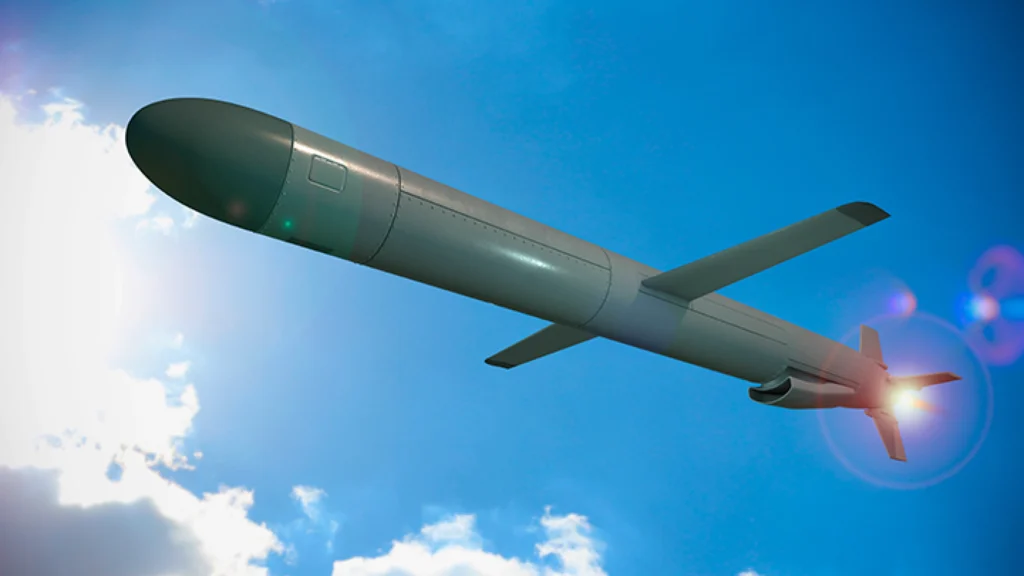
Фото: російські ЗМІ
Russia boasts a “nuclear-powered missile with unlimited range,” but behind the headlines, the 9M730 Burevestnik is mostly secret specs, failed tests, and a generous dose of risk.
“Pryamy” has compiled an overview of this weapon, from its concept and testing to potential combat use and the estimated scale of destruction in a nuclear strike
What kind of weapon is this?
The 9M730 “Burevestnik” (NATO reporting name: SSC-X-9 Skyfall) is a strategic cruise missile equipped with a nuclear-powered mini-reactor, designed for ultra-long-range flights and capable of evading air and missile defense systems.
Its primary advertised feature is a “virtually unlimited range,” made possible by a nuclear reactor providing continuous thrust. The concept is similar to the U.S. SLAM/Pluto project of the 1960s, which was ultimately canceled due to significant environmental and safety concerns.
Technical specifications
The missile’s actual tactical and technical specifications have not been officially disclosed. According to open sources, its length is approximately 12 meters, while the exact weight and mass–dimension characteristics of the warhead remain unknown.
Public sources describe the warhead as nuclear or thermonuclear, but no verified figures exist for its yield or weight. Any “exact” specifications found online should be treated as estimates or conjectures.
How a nuclear power plant works:
The main idea is that a mini-reactor heats the air—or generates electricity for the propulsion system—enabling the missile to fly for extremely long distances, theoretically giving it a “global range.”
However, this design creates serious radiation risks:
-
Potential radioactive emissions during flight.
-
Contamination of the impact site in the event of an accident.
-
Extremely complex testing and operational challenges.
Engineers and analysts have detailed the significant physical and environmental challenges posed by this concept.
Program timeline and status
The 9M730 Burevestnik missile program has a long and controversial history, marked by bold statements from the Kremlin alongside a series of accidents and uncertain test results.
In 2018, Russian authorities publicly presented a range of “new weapons systems,” including the Burevestnik, showcasing them as examples of “breakthrough technologies” in strategic armaments.
In August 2019, an accident occurred near the Nyonoksa training ground in the Arkhangelsk region during work with an “isotope energy source.” The incident killed Rosatom specialists and caused a brief spike in radiation levels in the area. Many media outlets linked the accident to Burevestnik testing.
In the fall of 2023, analysts and media reported activity at the Pankovo test site (Novaya Zemlya), suggesting preparations for another trial. In October, Vladimir Putin announced a “successful test” of the missile but offered no technical details.
By September 2024, researchers using satellite imagery identified a possible launch site near the Vologda-20 nuclear weapons storage facility, reigniting discussion about the missile’s potential deployment.
In August 2025, reports indicated that Russia was preparing yet another test of the system, fitting a pattern of high-profile announcements and preparatory activities that are often difficult to independently verify.
Overall, the Burevestnik program appears as a complex, multi-year endeavor plagued by inconsistent test results, where official rhetoric frequently outpaces tangible achievements.
Purpose and “strategic logic”
The concept behind the Burevestnik is to evade missile defense systems by flying unpredictable, long-range routes at low altitudes and striking from unexpected directions. However, many Western experts question the system’s military practicality due to:
-
High complexity and potential unreliability;
-
Significant radiation risks and political hazards;
-
The existence of effective nuclear deterrents (ICBMs) already deployed by Russia.
Carriers and Launches
Public information points to ground test facilities, such as Pankovo on Novaya Zemlya. While a mobile ground-launch option is conceptually possible, there is no official confirmation of any operational or serial carrier.
Legal Context
The INF Treaty is no longer in force, meaning there is no legal ban on land-based medium- or long-range cruise missiles between the US and Russia. However, operating a nuclear-powered cruise missile poses transboundary environmental risks, which could trigger international legal consequences, from liability for contamination to violations of radiation safety standards. This is a key reason the program faces widespread global criticism. (Assessment based on open analytical sources.)
Impact Scenarios
Since the type and yield of the warhead remain undisclosed, assessments are limited to hypothetical scenarios:
-
Assuming a medium-yield nuclear warhead (tens to hundreds of kilotons TNT equivalent), a strike on a densely populated city (thousands to tens of thousands of people per km²) would cause catastrophic immediate casualties and widespread fires.
-
In extremely dense urban areas, immediate deaths could number in the hundreds of thousands, with total losses—including injured, irradiated, and those who later die from complications—potentially much higher.
-
Actual effects would depend on factors such as the yield of the warhead, explosion altitude, terrain, building density, weather conditions, civil defense preparedness, and time of day.
It is worth emphasizing that these are approximate frameworks based on well-known physics of nuclear damage and public models of effects, and they are not an exact forecast figure for a specific city.
Why is the “Burevestnik” criticized even without combat use?
Criticism of the 9M730 “Burevestnik”
Even without combat deployment, the missile has drawn criticism for both technical and political reasons:
-
High man-made risks: Accidental crashes, test flights, or other incidents could release radioactive materials, posing serious threats to the environment and civilian populations.
-
Political dangers: Launching a nuclear-powered missile over another country—even outside wartime—carries immense political risks. Such an event could trigger international scandal and severely strain diplomatic relations.
-
Opportunity cost: Experts note that Russia already possesses a wide range of nuclear delivery systems that are easier to operate, more reliable, and less hazardous in terms of environmental and legal implications.
Comparison with Historical Analogs
The American SLAM/Pluto project (1950s–60s) also promised “near-limitless” range using a nuclear ramjet engine. However, it was ultimately canceled due to extreme danger, technical complexity, and environmental unacceptability. The Russian “Petrel” essentially repeats the same fundamental dilemmas of the Cold War era, albeit with modern technology and components.
Conclusion
The 9M730 “Burevestnik” is Russia’s most high-profile and technologically risky missile project, characterized by uncertain combat performance and a long history of accidents and preparatory work. If the system reaches serial production, its primary “value” would likely be political and psychological, as well as complicating missile defense planning. Nevertheless, secrecy, technical risks, and questionable strategic benefits remain core challenges of the program.
It should be noted that exact information on the missile’s mass, warhead size and weight, charge power, and speed has not been disclosed or confirmed by reliable sources. Any figures circulating in public sources should be treated as unverified estimates.
It was previously reported that preparations for a new test of the Russian 9M730 “Burevestnik” cruise missile, capable of carrying a nuclear warhead, were being recorded at a test site near Novaya Zemlya. It could take place in the coming days, on the eve of Putin’s meeting with Trump in Alaska.
As a reminder, Belarusian Defense Minister Viktor Khrenin said that during joint military exercises with Russia, it is planned to practice scenarios for the use of nuclear weapons, as well as the latest Oreshnik system. According to him, this is an important element of strategic deterrence in the face of growing tension on the country’s western and northern borders.
Also, follow “Pryamyi” on Facebook, Twitter, Telegram, and Instagram.